Shape While You Wait
Waves differ from curls in their geometry: a curl spirals continuously around an axis, whereas a wave alternates cleanly in an undulating S-curve. Because waves require less tight rotation, they are remarkably rewarding to set without thermal irons. While you sleep, read, or answer morning correspondence, gentle tension and evaporation lock in soft bevels.
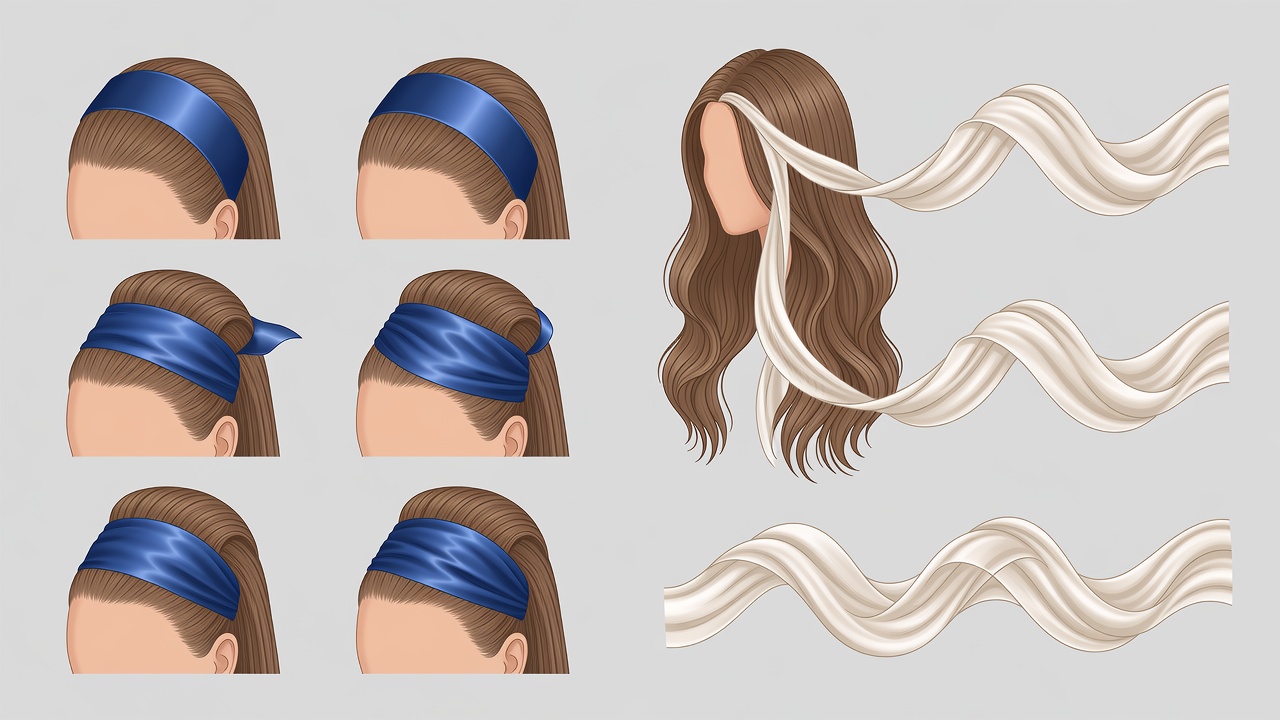
Method One: The Crown Silk-Ribbon Wrap (6–8 Hours)
Popularized in modern routines yet rooted in Victorian rag-rolling, the padded silk curling ribbon produces blow-out style waves with zero heat. The mistake most beginners make is placing the rod directly on top of the head like a headband and pulling sections straight down, which flattens the crown.
Anchor Slightly Forward
Part barely-damp hair down the centre or your preferred side. Clip the padded silk ribbon two inches behind your hairline so the arms drape in front of your ears.
Alternate Front & Back
Take a one-inch section near your temple, wrap it once away from your face around the ribbon, then add a section from the back and bring it forward across the rod to balance tension.
Brush with Boar Bristles
In the morning, slide the scrunchies off the bottom first, unclip the top, and gently brush the spirals together with a soft cushion brush so they merge into glossy S-waves.
“If the ends of your hair look crimped or fish-hooked after an overnight wrap, mist just the bottom two inches with water and roll the tips upward onto a single jumbo roller for ten minutes.” — Relaymatjumbex Wave Troubleshooting
Method Two: Twin Rope-Twist Waves (3–6 Hours)
Three-strand braids create a tight, zig-zag crimp. If you prefer elongated, coastal waves that look as though they were shaped with a wide-barrel wand, use a two-strand rope twist instead. Divide 85%-dry hair into two low sections behind your ears. Twist both sub-strands clockwise on their own axis while wrapping them counter-clockwise around each other. That opposing torsion keeps the rope from unravelling and yields soft, rounded bends.
Method Three: Classic Duckbill S-Wave Clipping (40 Minutes)
For readers with naturally wavy (Type 2A–2C) hair that tends to puff at the crown while falling flat near the face, flat stainless steel or acetate wave clips set directly into damp hair create sculpted 1930s-inspired ridges. Comb a light setting lotion through the top layer, push the hair forward half an inch with your middle finger to reveal the natural wave crest, and slide a long creaseless clip along the trough. Let dry naturally or under a cool diffuser before unclipping.