Support the Pattern
Whether you are coaxing natural spirals into cohesive ringlets or setting straighter textures on flexi-rods, curls thrive on hydration, slip, and zero dry brushing. Once a curl clump begins to dry, separating its fibres introduces static and frizz. The work happens while the hair is still glistening with water and leave-in conditioner.
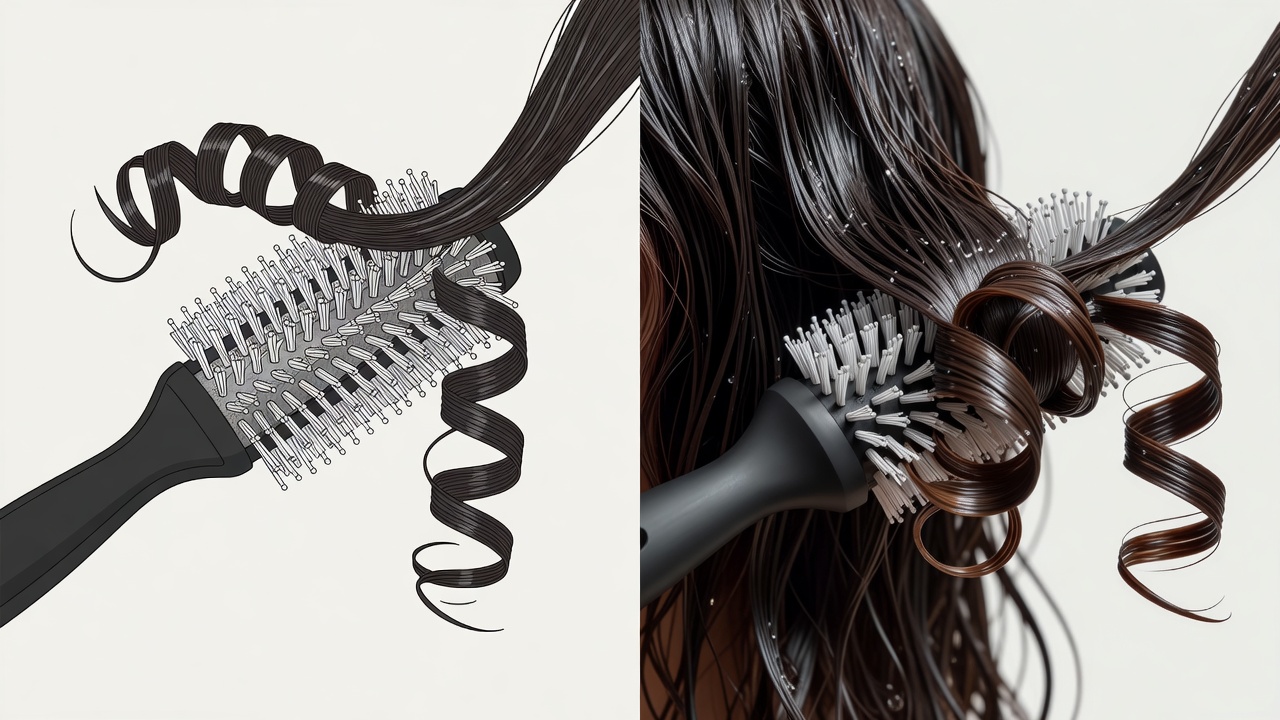
1. Brush Ribboning vs. Handle Coiling
A removable-row styling brush (such as the classic Denman D3/D31 or wooden-pin equivalents) works through controlled surface tension, much like curling a gift ribbon with the edge of scissors—except here, water and rounded thermo-plastic elastomer pins protect the cuticle.
- Tension Ribboning (Faster, Looser Clumps): Slide the brush under a soaking-wet horizontal section from the root, tilt the wrist slightly so the outer edge of the rubber pad kisses the hair, and glide smoothly through the ends. Give the section a gentle upward shake and scrunch so it springs into its natural cadence.
- Handle Coiling (High Definition for Crown & Face Frame): For stubborn pieces that refuse to curl at the crown, glide the brush through the wet section while rotating the brush 360 degrees around the hair so the strand spirals neatly around the smooth handle, then slide the brush downward out of the tube.
2. The Three-Stage Gentle Diffuser Protocol
Air drying heavy or high-density curls can take five hours, weighing down the roots and leaving the scalp damp for too long. A thoughtful diffuser schedule shortens drying time to 25–35 minutes without parching the ends.
Microfiber Plop
Accordion-fold your wet curls onto a smooth cotton jersey tee or flat-weave microfiber towel for ten minutes to wick excess dripping water without rough rubbing.
Root Hover Drying
Set dryer to low speed and medium warmth. Hover the diffuser rim around the crown and nape until the outer gel cast begins to firm up, preventing frizz before touching the tips.
Cool-Shot Cupping
Switch dryer off before lifting a section into the bowl, turn on low for 30 seconds, hit the cool button for 10 seconds to set the bond, and turn off before releasing.
3. Flexi-Rods and Perm-Rod Sets for Straighter or Transitioning Hair
If your hair lacks a strong natural curl or is transitioning away from chemical or thermal straightening, bendable foam flexi-rods bridge the gap seamlessly. Wrap damp sections laced with a lightweight setting mousse in a barber-pole spiral from root to tip—rather than rolling flat from the bottom up—to create natural-looking vertical ringlets. Once 100% dry, coat your fingertips with two drops of squalane or jojoba oil and separate each coil three or four times for soft fullness.